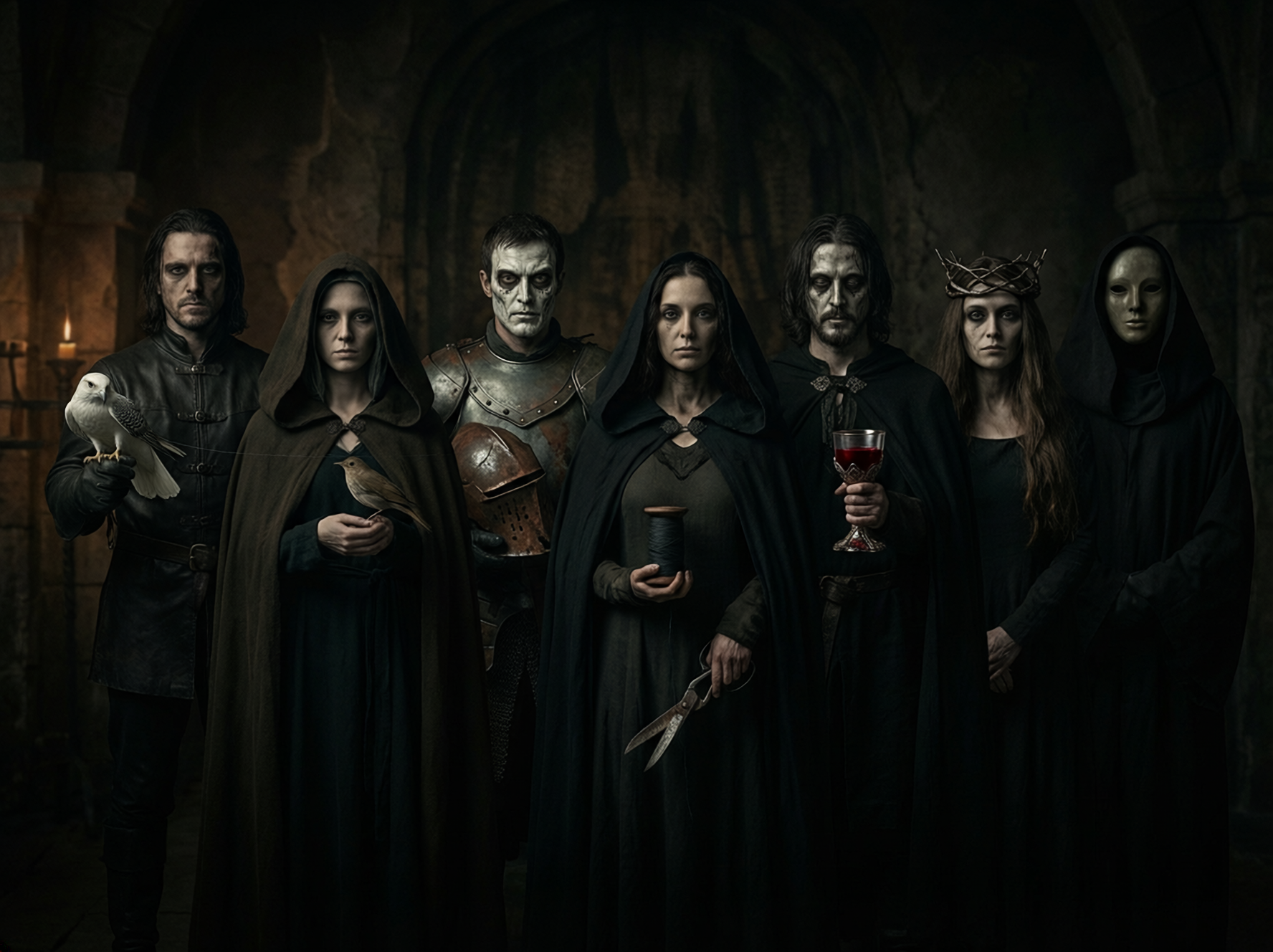
The 7 gods of death
1. Dikaiothanatos - God of Justified Death
Name Origin: dikaios (Greek: “just, righteous”), thanatos (Greek: “death”)
Domain: justice, vengeance, sanctioned killing
Aspect of Death: deaths that restore balance—lawful executions, righteous duels, vengeance against the wicked
Personality: stern, impartial, incorruptible
Role in the Pantheon: arbiter and mediator, disliked by gods of chaos or needless slaughter
Symbols: Balance scales cracked in the center; a sword with a white ribbon; a black-and-gold tribunal mask.
Sacred Animal: The white falcon (symbol of swift, righteous judgment).
Notes: This is the god who saves Agatha.
2. Hēsychia - Goddess of Peaceful Death
Name Origin: hēsychia (Greek: “stillness, tranquility”)
Symbols: A silver lantern; a sprig of olive; a closed eyelid carved in stone.
Sacred Animal: The nightingale (its soft song accompanying the dying).
Domain: natural endings, old age, quiet acceptance
Aspect of Death: gentle passing, release from suffering, final sleep
Personality: serene, comforting, maternal or sage-like
Cult: Hospices, healers who assist the dying, monks who chant funerary rites
3. Athanokratos - God of Violent / Chaotic Death
Name Origin: athanatos (“deathless, immortal” or—twisted here—“unyielding death”), kratos (Greek: “power, force”)
Symbols: A broken helm; serrated weapons; a storm-sigil.
Sacred Animal: The blood raven.
Domain: war, murder, catastrophe
Aspect of Death: sudden, senseless, terrifying deaths outside anyone’s control
Personality: wild, unpredictable, sometimes gleeful or indifferent
Cult: berserkers, assassins, disaster-worshipping cults
4. Moirael - Goddess of Fated Death
Name Origin: moira (Greek: “fate, allotted share”), ending -el to give a mythic, divine resonance
Symbols: Thread and shears; a circular calendar; an hourglass with black sand.
Sacred Animal: The spider (spinner of destinies).
Domain: destiny, prophecy, inevitability
Aspect of Death: the deaths that “must” happen according to cosmic plan
Personality: cryptic, patient, neutral—neither cruel nor kind
Cult: oracles, astrologers, chroniclers who record the fates of great heroes
5. Sacrifex - God of Sacrificial / Noble Death
Name Origin: sacrificium (Latin: “sacrifice”), -fex (Latin: maker, doer) → “he who makes holy offerings”
Symbols: A burning heart; a blade wrapped in laurel; a chalice that overflows upward.
Sacred Animal: The stag (icon of noble offering).
Domain: martyrdom, self-offering, necessary loss
Aspect of Death: self-chosen death for a cause—ritual offerings, heroic sacrifices
Personality: noble, solemn, inspiring
Cult: warriors who pledge their lives to protect others; sacred ritualists
6. Necría - Goddess of Undeath and Lingering Souls
Name Origin: nekros (Greek: “corpse”), softened into Necría to sound divine and feminine
Symbols: A hollow crown; a veil of shadows; an open grave that emits light.
Sacred Animal: The moth (drawn to the realm between life and death).
Domain: necromancy, lingering souls, broken mortality
Aspect of Death: deaths that fail to “complete”—ghosts, liches, revenants
Personality: mournful or possessive; obsessed with keeping souls from moving on
Conflict: natural enemy of the Peaceful Death deity
7. Lethebron - God of Forgotten Death / Oblivion
Name Origin: Lethe (Greek: the river of forgetfulness), bron (sounds like brontē, Greek “murmur/rumble”, but also evokes “shade/born”)
Symbols: A blank mask; erased inscriptions; a candle that gives no light.
Sacred Animal: The blind cave fish.
Domain: oblivion, erasure, lost souls
Aspect of Death: deaths with no witnesses—unmarked graves, vanished people, erased histories
Personality: cold, quiet, detached
Visual motif: masks, empty pages, dust
Cult: secretive archivists, archaeologists, memory-keepers who fear oblivion
Pantheon Dynamic
-
The Justified Death god may clash with the Violent Death god over the nature of killing.
-
The Peaceful Death goddess and Undeath goddess could be ancient rivals, they compete for the souls, release vs. clinging.
-
The Fated Death goddess might outrank the others—fate binds every death, even divine ones.
-
The Forgotten Death god could be feared by mortals and gods alike because oblivion is the most absolute form of death.
- The Sacrifical death acts as a bridge between mortal will and divine necessity.